RefletsNews · Authority and trust
About 20 people attended Brittany Newell’s Stanford talk, which a student paper condemned the day before
About 20 people heard novelist Brittany Newell at Stanford on October 8, 2026, a day after the Stanford Review attacked the invitation. Witnesses told the Stanford Daily that two students seemed to film the talk, and that a classmate asked the speaker if she was comfortable being filmed.

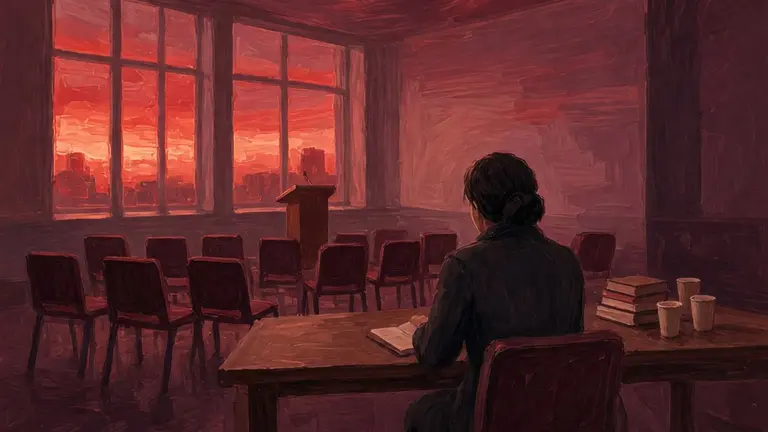
Stanford’s Structured Liberal Education program hosted the novelist Brittany Newell, an alumna who has worked as a dominatrix, on October 8, 2026, and about 20 people came. The student newspaper that attacked the invitation had published its article the night before she spoke.
An invitation sent to first-year students
The Structured Liberal Education program, known as SLE, is Stanford’s liberal arts residential-learning program for first-year students. According to The Stanford Daily, it advertised Newell’s visit by email as including “advice to budding writers about a career in the arts.” The talk belonged to the program’s “Books and Boba” speaker series.
The Stanford Review, an independent student paper, quoted the same email on October 7, 2026. It said the email described her “wide-ranging life as a drag performer, kink worker, journalist” and as an archivist of San Francisco’s queer community. The Review added that a free copy of her novel Soft Core was offered as an incentive to attend.
Newell is a Stanford graduate, class of 2016.
Soft Core is a novel that the Daily describes as inspired in large part by her firsthand experience working as a dominatrix in San Francisco, and which it says has received attention from major publications. NPR describes its protagonist as a stripper who begins working as a professional dominatrix after her ex disappears, and says the book takes readers into the city’s dive bars, strip clubs and dungeons.
What the Review argued
The Review’s piece was an opinion article, and it did not hide its question. It set SLE’s stated aim, “a Western-based education for a good life,” against the invitation, and set the program’s required reading of Aurelius’s Meditations and Aristotle’s Nicomachean Ethics against her profession. It asked what SLE “materially” gains from hosting her. It also judged the novel, writing that she is “not an amazing writer.”
The article also contains a concession that later retellings tend to drop. The Review wrote that SLE “has the right to choose which speakers it wishes to platform,” and added that it believed the program “should, and can, do better.” That is a complaint about taste and priorities, made by people who accept that the invitation was the program’s to give.
A free book and a cup of boba are a modest instrument for corrupting a curriculum that includes Marcus Aurelius. The Review’s worry deserves to be stated without that smirk, and it is stated here: it asks whether SLE means to tell 18-year-olds that profiting from others’ vulnerabilities is preferable to working 50-hour weeks at a big company. Whether a program owes its students a stricter filter is a fair argument. It was made before anyone had heard what the speaker would say.
Twenty people and a question about publishing
What the room heard is reported by the Daily, which spoke to attendees and to the program. Around 20 SLE students, alumni and faculty were present. According to several of them, most questions from students concerned Newell’s creative process, her time as a writer at Stanford and publishing. Alumna Vivi LaFont said some students asked about her background as a dominatrix as it related to her literary work.
Michaela Hulstyn, SLE’s associate director, told the Daily that Newell spoke about “her critically-acclaimed fiction, her literary influences and advice on how to publish short stories, query an agent and navigate the publishing world as a young person.” Student Nic Chesterman observed that “a lot of the kids were much more interested in the process of being a professional writer than about anything else she did.”
Hulstyn described the program’s rule for optional events: they are meant to introduce students to writers, artists and thinkers “whose ideas challenge assumptions or help them engage thoughtfully with a variety of ideas and forms.” She said one overlap with the quarter’s required reading was the idea that fiction can do things aside from sending messages.
English professor Mark Greif, who moderated the talk, had also invited Newell to his course ENGLISH 177, “Contemporary Novel in U.S. Perspective.” He told the Daily the aim was not “pushing an agenda other than that of encouraging people to read and also perhaps to become artists.” He called the separation of the “imagined creative work” from its author “the first rule of literary criticism,” and said her personal experience mattered only because it gave her firsthand knowledge of the community in which the book is set.
These are the voices of the hosts, defending their own invitation, and they should be read that way. The audience was about 20 people, a small room for a controversy of this size.
A phone, and a question about being filmed
The Daily’s report contains the only moment in this story where consent was asked about aloud. According to multiple witnesses, two students moved from the back of the room to the front row midway through the event, apparently trying to film with their phones without being noticed. When Newell mentioned the Review article, they laughed quietly. She asked why, and they said they knew its author.
Later, Chesterman sat next to them and noticed the angle of one phone. He turned to the speaker and asked: “are you comfortable being filmed? Because I think someone’s filming.”
The students denied it. “It was a panic, deleting stuff,” an anonymous freshman attendee told the Daily, though she added that she did not see their screens.
The limits sit right there. The account comes from witnesses, one of them anonymous. The Daily wrote that it had reached out to the two students for comment, and its report, last updated on October 14, 2026, does not say that a recording was published. What it does establish is who raised the question: a member of the audience, not any of the institutions arguing about the evening. An earlier brief on this landing covered an adult festival in Melbourne whose organisers say consent can be withdrawn at any time. Newell’s audience in Stanford’s lecture room got a smaller version of the same rule, and it was enforced by a classmate.
Her own account of the work
Newell’s own words are the third layer. In a statement to the Daily she said, “I don’t mind controversy. It’s good to make people think and feel deeply.” She added that she would rather make money helping men and women feel better about shame “than make money designing warfare technologies,” which is a pointed comparison for a Stanford audience and one the record gives no way to test.
In an interview with NPR’s Tonya Mosley, published on February 6, 2025, she had described the job in her own frame. She took it after finding work as a waitress and bartender exhausting and wanting time to write. “What makes a good writer is also what makes a good dominatrix, which is empathy and curiosity and bravery,” she said. She defined the work by a single trait, saying “the defining quality would be the power dynamic.”
She also said that Soft Core is a mix of fiction and “sensory details” from her own life and the lives of people close to her, even though many readers assume it is autobiographical. That interview was part of the promotion of a new book, and it is her account, not an outside assessment.
How the story traveled
The Daily writes that The Daily Mail followed the Review with coverage of its own; we did not read that article. Breitbart News published its version on October 14, 2026. It reported that the event “divided students,” citing the Review, and repeated the Review’s questions about whether SLE gains anything from the visit.
The sequence matters. The Review’s article is dated October 7, 2026, and says Newell “will feature on Thursday,” so it could not report a student split over a talk that had not happened. Ada Huang, an SLE student, made the point in a Daily opinion piece on October 13, writing that the article was “written before understanding the nature of her talk.” Huang is a participant in the program she defends, which is worth knowing, and she argues for “intellectual humility, not moral condemnation.”
For readers in the United States and the United Kingdom, the lesson is procedural. A guest invitation at a university program is a decision by staff and faculty, answerable to the students and to the program’s own stated aims. A campus paper can contest it, a tabloid can amplify it, and the room can check it. In this case the room had the last word.
Hulstyn told the Daily that the event and the controversy “generated an engaging conversation amongst students about the enduring double standard we see in the reception of women’s writing.”
Sources
- The Stanford Review, opinion piece on the SLE invitation to Brittany Newell, The Stanford Review, October 7, 2026
The audio version of this article is read by an AI-generated synthetic voice.
A generated AI Persona: not the person in this article, nor any real person.