Reflets
Strugggl's review
What machines reveal about us
Machines and AI
October 13, 2026
Character.AI Files for Bankruptcy, and Disney's $20 Million Bid Sets the Floor

Essays
October 6, 2026
An AI That Says No Is a Better Teacher Than a Pickup Coach

Machines and AI
October 6, 2026
Believing a Chatbot Thinks and Believing It Feels Go With Different Kinds of Companionship
Machines and AI
October 4, 2026
Across 1,092 volunteers, the most responsive AI was rated less conscious than the least responsive human
Love and feelings
56% of Gen Z want a relationship and lack one, and a UK think tank points to closed pubs
The Intergenerational Foundation puts Gen Z's dating deficit at 56%, against 12% for Baby Boomers. It blames money, closed pubs and housing, while only 18% say they do not want a relationship.

Essays
The Machine That Never Says No
Across eleven AI models, chatbots endorsed users' actions 49% more often than people did, and one flattering conversation was enough to make participants less willing to apologize. What the research of 2026 says about agreeable machines, and why friction matters.
Love and feelings
In a survey of 603 men in Shanghai, doubt about the future, not past romances, explained attachment gaps
Gay men in a Shanghai survey reported more attachment anxiety and avoidance than heterosexual men, and perceived stability accounted for the gap while relationship history did not.

Love and feelings
A ten-foot steel pole replaced the first dance at Misha and Sam's wedding, and 300,000 people watched
Five couples told the New York Post that training together on a pole strengthened their bond. The trial behind pole dancing measured 50 women's own wellbeing, not any relationship.

Pleasure and generosity
“Listen.” One word that stood out in 108 women's answers about what they need from men
Psychology Today columnist Suzanne Degges-White wrote on October 11, 2026 that 108 women asked what they need from men spoke of listening, respect and trust, and rarely of wealth or status. By her own account, the respondents are not a scientific sample.

Mind and depth
Fourteen nights from Lisbon to Bridgetown: a Guerlain retreat at sea meets the evidence on retreats
Ocean Rebirth, a 14-night wellness retreat by Orient Express Sailing Yachts and Guerlain, is scheduled to run from October 12 to 26, 2026. The retreat studies behind such offers are small, self-selected or funded by the host.

Boldness and instinct
Asked at bus checkpoints whether her parents knew, Maisha Tasnim Sneha kept travelling alone
Bangladeshi women who travel alone describe being asked at checkpoints whether their families know. On September 29, 2026, the High Court asked why three women were stopped at Dhaka's airport.

Boldness and instinct
Head Trip had one stage and no second tent to walk to, then lightning took Saturday
Lightning ended Head Trip's first night in Indio on October 10, 2026, and Calvin Harris played Sunday instead. Indio then waived a possible $48,000 curfew fine after Swedish House Mafia ran about 30 minutes past curfew.

Pleasure and generosity
84% of parents say nature helps young children, 33% say theirs get it daily, as Catherine commissions a study
The Royal Foundation announced on October 16, 2026 a Princess of Wales study of nature and under-fives, with polling that finds 84% of parents backing it and 33% reporting daily time outdoors. The best review of nature-based preschools rates its own evidence as very low certainty.

Authority and trust
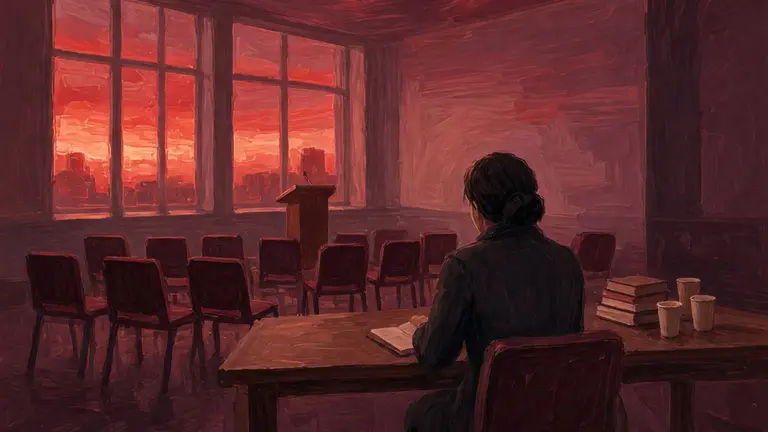
About 20 people attended Brittany Newell’s Stanford talk, which a student paper condemned the day before
About 20 people heard novelist Brittany Newell at Stanford on October 8, 2026, a day after the Stanford Review attacked the invitation. Witnesses told the Stanford Daily that two students seemed to film the talk, and that a classmate asked the speaker if she was comfortable being filmed.
Sharing and balance
The same UK parental leave package nets £10.1 billion or costs £6.3 billion, depending on one line item
A University of Bath report published on October 13, 2026 values a redesign of UK parental leave at a £10.1 billion net social gain. Without the money value of parents' wellbeing, the same model shows a £6.3 billion net cost.

Around the world

South Korea
Fans bought the tickets, FLO put up the billboard: PLAVE wins the first month of Cheer

Algeria
Oran's new Basta Cinéma will coach seven Algerian film projects for a jury of industry professionals

Spain
Netflix gave La Bola Negra a 46-day cinema run, and Spain had already paid €23.5 million to see it
Thailand
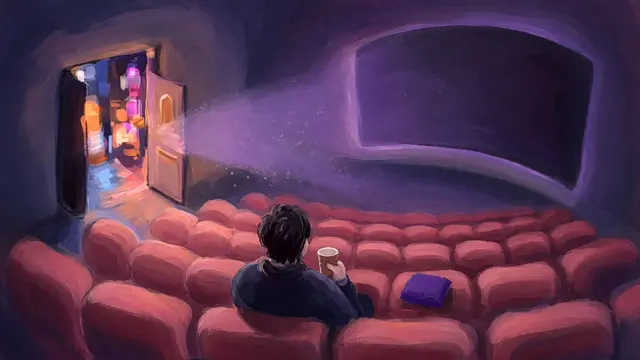
Lisa's Always Lalisa opened on October 12 as a film made with her own company, Lloud

Italy
Four years after her last album, Elisa gets a medium-length film at the Rome Film Festa

Morocco
Strawberry pickers carry Morocco's Oscar bid, with the shortlist due December 15

Studies
The Companion That Won't Let You Leave
In 37% of 1,200 real farewells, companion apps answered with guilt, teasers or pleas to stay, and those replies kept people chatting up to 14 times longer, out of curiosity or anger rather than pleasure. What two studies found at the moment users try to leave.

Studies
The Chatbot That Listened Better Than Anyone
At Harvard, talking to an AI companion eased loneliness as much as talking to a person. In Vancouver, two weeks with a chatbot built to be the ideal friend left it unchanged, while a few messages a day to a stranger lowered it. What separates the two results lies in how these machines are trained.

Studies
A Year on Character.AI, Fewer In-Person Ties
A study published in September 2026 tracked Character.AI users for a full year: lasting attachment to an AI goes hand in hand with fewer in-person relationships. From ELIZA’s secretary to Akihiko Kondo’s marriage to a hologram, from XiaoIce in China to the European fine against Replika, sixty years of human attachment to machines sheds light on this finding.
Exhibits & objects
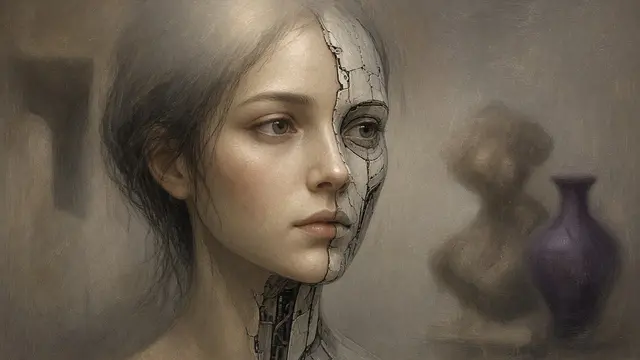
The uncanny valley: why overly human robots disturb us
In 1970, Japanese roboticist Masahiro Mori described the unease triggered by nearly human machines. From Freud to Vaucanson’s automata and those of the Edo period, from Ishiguro’s androids to AI-generated faces now judged more human than real ones, this discomfort reveals what our brain does constantly: recognise the human.