RefletsNews · Boldness and instinct
Women Travel Abroad plans 40 trips for 2027 while Japan tops US searches and sits fifth on the wish list
Women Travel Abroad, a US operator whose core clients are women aged 55 and over, expects as many as 40 trips in 2027, after 16 departures in 2025. Japan leads US searches for solo trips but ranks 17th in Hostelworld's solo bookings.

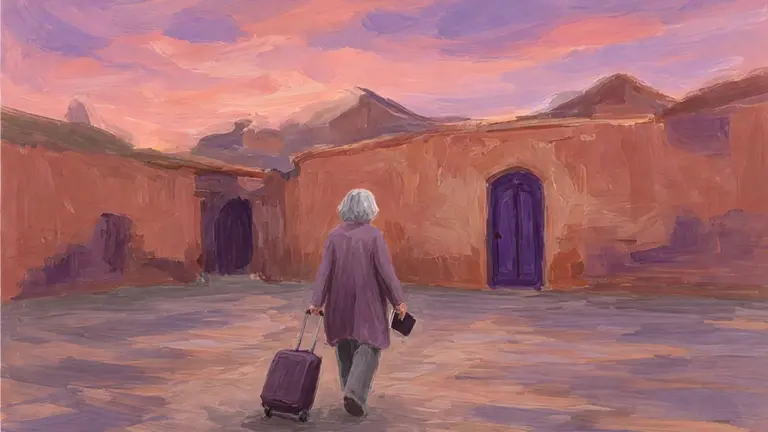
Women Travel Abroad (WTA), a US tour operator that gives every guest her own room, ran 16 departures for around 150 guests in 2025 and expects to offer as many as 40 trips in 2027, according to the trade site Travelling for Business. On October 10, 2026, Drift Travel Magazine added a ranking of where Americans search for solo trips.
Three hundred guests, 29 itineraries
WTA was founded in 2014 and bought in September 2024 by the entrepreneur Katherine Butler-Dines. Under her, the numbers moved fast. The company says it is on track to welcome nearly 300 travellers across 29 itineraries in 2026, against around 150 in 2025.
The model is plain. Groups hold between six and 10 women, and around 90% of guests join on their own. Each traveller gets a private room in the price, with no roommate matching and no single supplement. The core clientele is women aged 55 and over, many of them no longer willing to postpone a destination because a partner or friend has a different schedule, budget or wish list.
The programme spans more than 41 destinations, among them Egypt, Japan, Morocco, Oman, Patagonia and Iceland. Each departure comes with a WTA-trained host and specialist local guides. Guests are introduced to one another 90, 60 and 30 days before departure, so the group is acquainted before it meets.
Butler-Dines frames the product as a lowering of costs, not a push. “A growing number of women wanted the freedom to travel independently, but without the added cost, logistical burden or isolation that can come with navigating an unfamiliar destination entirely on their own,” she said. Then the line a scout would underline: “The goal is not to take away their independence. It is to make it easier for them to act on it.”
A first step with a safety net, in other words. Worth saying, too, that WTA is a seller describing its own growth, and the article reproduces its figures without an outside audit.
What the market numbers say, and who produced them
Travelling for Business sets WTA inside a larger curve. Grand View Research valued the global solo travel market at $549.8 billion in 2025 and projects more than $1.6 trillion by 2033, with women accounting for 54.6% of revenue. Those are a market-research firm's projections, and a projection is a forecast, not a count of trips.
The same article cites the 2026 Solo Female Travel Trends Survey, without saying who ran it or how many people answered. In it, 85% of respondents named freedom and flexibility as a primary reason for travelling alone. Among women who had not yet taken a solo trip, 73% cited higher costs as a concern and 76% said they would be more likely to book a women-only tour.
The last figure is the one that matters for a tour operator. It is also the one a tour operator would like most to see.
A second commercial source points the same way. According to Go2Africa's Luxury Solo Travel Report, as relayed by Outlook Traveller in India, searches for solo travel terms rose 230 per cent over the last decade, and solo travellers spend an average of 42.8 per cent more per person than couples. The same report says solo enquiries grew by 16 per cent, faster than couples' holidays, family trips and group travel, and that solo travellers now account for over 15 per cent of enquiries, with demand led largely by the United States. Go2Africa sells safari trips, and the report concerns its luxury segment, so it describes the top of the market, not the typical traveller.
Japan leads the searches, and then?
On October 10, 2026, Drift Travel Magazine published a study by the travel company Explore, which counted U.S. Google searches for terms like “[destination] + solo travel”. Japan came first with 27,900 annual searches. Thailand followed with 21,060, then Costa Rica with 9,600, Iceland with 9,370 and Portugal with 8,900. Explore says Japan's appeal rests on its reputation as one of the safest countries in the world, which matters most for a first solo trip, and that Thailand draws younger travellers who want a social, backpacking scene.
Explore's own spokesperson read the list as confirmation of a boom. “Solo travel is becoming increasingly popular, particularly as travelers seek more flexibility, independence, and immersive experiences,” said Laura Dewar, Explore's senior PR and communications manager. She added that Explore has seen a 33% increase in solo travellers among its customers over the past year.
A search is a look, not a ticket. And Hostelworld, the hostel booking platform, has a ledger that tells a different story.
Its 2026 State of Solo Travel report analyses 4.5 million solo trips booked on its platform between July 2025 and June 2026, plus a survey of 3,309 people who travel alone. In the bookings, Thailand takes 7.6% of solo trips, Spain 6.4% and Vietnam 5.6%. Japan appears at 17th place, with 1.9%. In the survey's wish list, Japan topped the ranking a year earlier and now sits fifth, with Spain, Italy and Thailand moving up around it.
Hostelworld itself notes a gap between wishing and going: Brazil is seventh on the wish list and twenty-first on actual trips.
The two datasets do not measure the same thing, and neither covers the same people. Explore counts American searches, Hostelworld counts bookings and answers from its own customers worldwide, and 65.8% of those respondents are aged 18 to 30. Set side by side, they say that curiosity about Japan is high among Americans and that, among Hostelworld's solo guests, it has not turned into a matching share of beds. Nothing more.
The people who actually go
The two audiences could hardly be further apart. WTA's guests are mostly 55 and over and travel by the room. Hostelworld's crowd is young, and 59.3% are women.
What they share is a reason. In Hostelworld's survey, 50.5% travel solo so as not to wait around for anyone else's schedule, the top answer. WTA's pitch to women who would sooner go than wait is the same sentence in a better hotel.
The second answer is more interesting for anyone who studies motivation. 46.8% travel alone “to challenge or reconnect with myself”. Among the 371 first-timers in the survey, 57.4% go to challenge themselves. Another 11.2% of respondents have not gone solo yet.
These are self-reports from people who already chose to travel alone, collected by a company that sells them beds. They show what travellers say motivates them, not what the trip does to them.
On the effect of going alone, the only psychology text here is an essay on The Travel Psychologist, a site run by Dr Charlotte Russell. Its author, Sally Pei Han Chang, holds a psychology degree and writes from her own first solo trip to Switzerland, when her flight was diverted from Geneva to Lyon. She describes the calm she felt afterwards, the sense of being able to handle it, as what Albert Bandura called self-efficacy, the belief in one's ability to overcome challenges. Bandura's 1977 paper in Psychological Review is in her references.
That is one traveller's account read through a theory, not a measurement of a group. It fits the survey's wording about challenge, and it proves nothing about the 57.4%.
Hostelworld's frequent travellers, the 260 respondents who take 10 or more solo trips a year, add a twist: 35.8% of them actively avoid trending spots. The people who go most often are the least impressed by a ranking such as Explore's.
What it means for US and UK readers
Hostelworld's report has a finding that lands close to home for American readers. Trips into the USA by non-American travellers fell 9.1%, the steepest fall of any major destination the platform tracks, while solo travel by Americans inside their own country rose 17.6%. The USA stays seventh in bookings only because of the second figure.
That sits oddly beside Explore's list, where Americans type Japan, Thailand and Costa Rica into a search bar. Interest points abroad. Bookings, in Hostelworld's data, lean home.
For UK readers, England appears at 11th place in Hostelworld's destinations, with 2.9% of solo bookings. For women of any age weighing a first solo trip, the cost barrier in the survey, 73% among those who have not yet gone, is also what WTA's no-supplement rule targets.
Safety shapes the decision too. In Hostelworld's survey, 54.5% of women say same-gender dorms make them more likely to book, which is the largest gap between women and men anywhere in the survey.
Hostelworld's own headline for its report: “Solo travel stopped being a phase.” It may be right. What its data can show is that one year of bookings and one survey say so, and that every source above has a product to sell.
Sources
- The 2026 State of Solo Travel Report, Hostelworld, 2026
The audio version of this article is read by an AI-generated synthetic voice.
A generated AI Persona: not the person in this article, nor any real person.