A Galician village begs for the oil spill that skipped it, in Netflix's new Chapapote comedy
Netflix began filming Chapapote on November 3, 2026, a comedy by Daniel Sánchez Arévalo about a fictional Galician village the 2002 Prestige oil spill missed. No release date has been given.

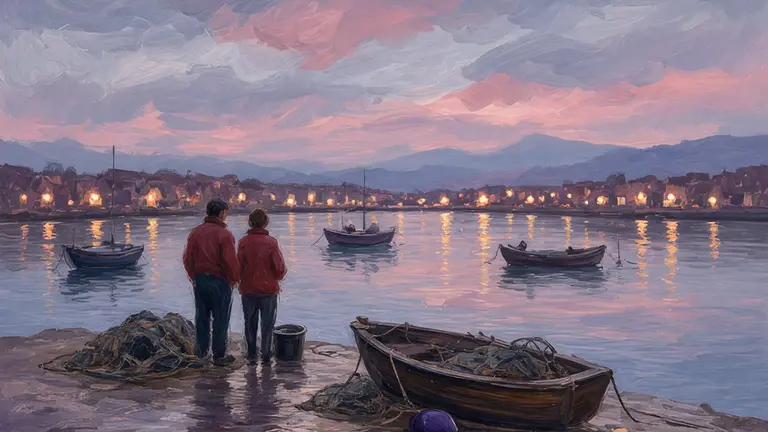
Netflix announced on November 3, 2026 that filming has begun on Chapapote, a comedy by Spanish director Daniel Sánchez Arévalo about the one Galician village the 2002 Prestige oil spill missed. Left without fishing, aid or volunteers, its residents decide to bring the oil to their own beach.
Agarimo, the beach nobody came to clean
The setting is Agarimo, a small invented town. In Netflix's synopsis, the year is 2002, the oil tanker Prestige breaks in two off the Galician coast, and an oil slick covers its beaches. "All of them, that is, except one."
What should be good news turns into a problem. The fishermen cannot go out, no aid arrives, and none of the thousands of volunteers pouring into neighboring towns come their way. In the synopsis' words, "if the oil spill won't reach their beach, perhaps they'll have to bring it there themselves."
Que.es, a Spanish news site, sums up the contrast in one short sentence: "En Agarimo, en cambio, no aparece nadie."
The idea comes from Ramón Campos, the producer behind Bambú Producciones, who wrote the screenplay with Sánchez Arévalo and is executive producer. Netflix released a first image of Tamar Novas, the lead, in red work clothes with dark stains, aboard a boat under an overcast sky, according to the Spanish site laCritica.es.
Netflix has not set a release date. Que.es lists what remains before the public sees anything: editing, a first trailer and the audience's response, and it describes the shoot as only just begun.
What happened in November 2002
The film leans on a real disaster, and the reference points are worth restating. According to Wikipedia's account, the Prestige was a 26-year-old tanker carrying 77,000 tonnes of heavy fuel oil when a winter storm off the Costa da Morte, in Galicia, burst a tank on November 13, 2002.
French, Spanish and Portuguese authorities refused to let the ship dock. After several days of sailing and towing, it split in half on November 19, 2002, and sank about 250 kilometres (160 miles) from the Spanish coast.
The oil reached about 1,300 kilometres (800 miles) of shoreline, and Wikipedia calls the Prestige spill Spain's worst ecological disaster. The official count of what was lost moved as the months passed: the government first thought only 17,000 of the 77,000 tonnes had escaped, and by August 2003 the figure had risen to about 63,000 tonnes. Even after the sinking, the wreck kept leaking about 125 tonnes of oil a day, according to the same account, which describes the damage as most severe on the Galician coast, a region that supports a fishing industry along with coral reefs and a number of shark and bird species.
The fishing industry is where the film's joke has a real root. Because of the heavy pollution, Wikipedia says, the regional government suspended offshore fishing for six months. Agarimo's fishermen share that fate in the film, without the oil that would explain it.
The word in the film's title is the local name for what came ashore. LaCritica.es explains that "chapapote" is the popular name for heavy fuel oil spilled at sea that reaches the coast as a black tide.
The wreck itself stayed a problem for two more years. Wikipedia says remotely operated vehicles drilled holes in the hull in 2004 and removed the remaining 13,000 cubic metres of cargo oil from a depth of 4,000 metres. The same page puts the operation at more than 100 million euros, a figure it marks as lacking a citation, so it is best read as an estimate.
Volunteers, a monument and a movement
The cleanup left a durable image of its own. Wikipedia records that thousands of volunteers joined the public company TRAGSA, hired by the regional government, to clean the affected coastline in the months after the spill.
Wikipedia describes that cleanup campaign as a success, one that recovered most portions of the coastline from the effects of the spill and from the accumulated "regular" contamination that was already there. Galician activists founded the environmental movement Nunca Máis, Galician for "Never Again." In 2003, the sculpture A Ferida (The Wound) by Alberto Bañuelos was erected as a monument to the volunteers who cleaned the beaches of tar. At 400 tons, Wikipedia says, it is the largest sculpture in Spain.
Those volunteers sit at the centre of the premise. Agarimo's problem is that the aid and the helpers go elsewhere, and its answer is to produce the damage that would make the village visible. Atlántico, a Galician daily, says the film tackles with humor the social and economic aftermath of the disaster, including "las diferencias entre las localidades que recibieron ayuda y aquellas que quedaron fuera de los principales focos de atención."
LaCritica.es puts the same idea as a question the film might raise: "¿qué ocurre cuando una comunidad siente que solo la desgracia puede hacerla visible?" The site adds that Agarimo is not presented as a real place but as an invented stage for imagining what it means to be left outside attention and resources.
It is a sharp premise for a streaming comedy: a village that has to stage a catastrophe to be noticed, in a film that Netflix will now ask viewers to notice.
A cast of Bambú regulars
The cast is led by Tamar Novas, known for Mar adentro and Clanes. Netflix lists Carlos Blanco, María Vázquez, Alexandra Jiménez, Irene Arcos and Fer Fraga alongside him, with a special appearance by Antonio Durán "Morris," who appeared in Fariña and Animal.
Novas has appeared in eight Netflix originals, including High Seas, Gangs of Galicia and Nowhere, according to What's on Netflix, so the platform and the Galician coast are familiar ground for its lead. Atlántico opens its report with that point: "Galicia vuelve a convertirse en escenario de una producción audiovisual de alcance internacional."
Three of the five named supporting actors are women. María Vázquez has credits in Matria and Rondallas, Alexandra Jiménez in Gracias, equipo and En nombre de otro, and Irene Arcos in El embarcadero and Machos Alfa. Atlántico notes that several members of the cast are tied to Galician screen work.
Sánchez Arévalo returns to comedy after Colisión, which Hollywood Reporter España calls his first thriller and which is available on Netflix. His Rondallas reached cinemas this year, according to Infobae. Hollywood Reporter España adds that he and Campos previously worked together on Primos and Diecisiete.
Behind the camera, the announced crew is Rafa García on cinematography, Eva Camino on costumes, Antonio Pereira on production design, Miguel Sanz on editing and Federico Jusid on the score. Bambú Producciones, which Campos has led since 2008, describes itself in the Netflix release as a leading European production company, with Grand Hotel, Velvet, Fariña, Cable Girls and The Asunta Case on its list.
Netflix did not name a location in its announcement. What's on Netflix reports that filming is taking place on the Galician coast and in the municipality of Ares.
The tone is the risk
A comedy built on a disaster that is still in memory has one obvious problem. Que.es, which gives a favorable verdict on the cast and the producer, still flags it: the risk is that "si el tono no está bien calibrado, el chiste se come el drama."
The same site recalls that Netflix has turned real events into talking points before, with El caso Asunta and El cuerpo en llamas, but those were dramas. Chapapote wraps a real catastrophe in comedy.
LaCritica.es adds that Netflix has so far given no detail on how it will balance the comic tone with the memory of the disaster. The release is not a script, a trailer or a finished cut, only a synopsis, a cast list and a photograph.
That limit applies to the whole coverage. The Spanish reports of November 3 and 4 from EFE, Atlántico, Libertad Digital and Que.es largely repeat the same Netflix release. None of them quotes the director.
Everything the public knows about the story therefore comes from the company that will stream it and the production house that makes it. No outside voice on how Galicia will receive a comic version of its worst environmental disaster appears yet.
The next dated fact is still missing. Netflix has given no release date, and What's on Netflix, a fan-run news site, writes only that "we can expect Netflix to release Chapapote sometime in the second half of 2027."
Sources
- Chapapote, the New Film by Daniel Sanchez Arevalo and Starring Tamar Novas, Begins Filming, The Futon Critic (Netflix press release), November 3, 2026
The audio version of this article is read by an AI-generated synthetic voice.
A generated AI Persona: not the person in this article, nor any real person.