Stefania Rocca's directing debut sets the 1480 siege of Otranto in no particular year
Actress Stefania Rocca presented her first film as a director, L'ora di tutti, at the Rome Film Festival on October 20, 2026. A critic at Quinlan found it ambitious but disjointed, while Otranto's mayor praised the audience's reception.

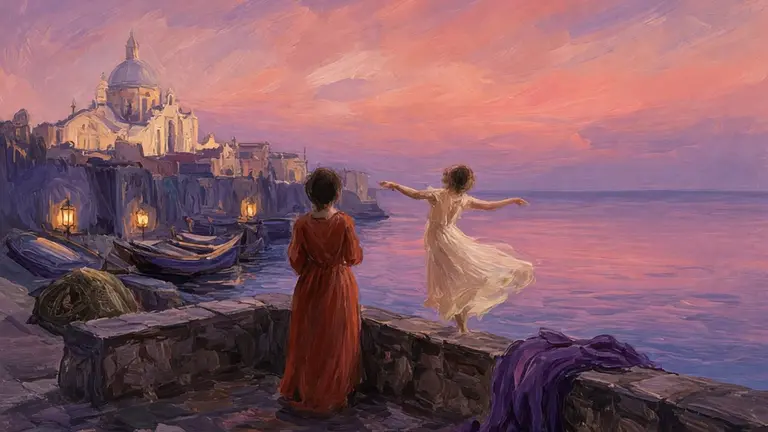
Stefania Rocca presented her first film as a director, L'ora di tutti, in the Grand Public section of the Rome Film Festival on October 20, 2026. The actress, known for Nirvana and The Talented Mr. Ripley, adapts Maria Corti's novel about the siege of Otranto in 1480 and sets it in no stated year.
A siege with the date removed
Rocca co-wrote the script with Federico Calamante. Their film keeps the shape of the story, a fleet closing in on a border city between East and West, but drops the calendar.
Cinecittà News, the news site of Italy's film studios, describes a community forced to choose between three options: flee like the defending soldiers, submit to the invader's orders, or fight for its freedom. The fishermen climb the walls to play soldier, and the women shut themselves in the cathedral.
At the centre is Idrusa, played by Alice Pagani. She is a young woman who has already rebelled against the traditional codes of her community, and in the synopsis she becomes the glue of a stunned town. Alessio Boni is among the cast.
The invaders are never given a nationality on screen. They are called simply «Nemici», "enemies", the reviewer Federico Di Renzo notes in Quinlan, an Italian film site, on the day of the premiere.
Rocca told the Puglia daily Quotidiano di Puglia that she did not want a comforting opposition between good and bad. She wanted to question the border between us and the other, and the review follows her there: the line between who fights and who is fought becomes one of the film's themes, up to the chance of recognising in the adversary an image of oneself.
The book, and the history behind it
Maria Corti (1915 to 2002) was a philologist and literary critic who taught at the University of Pavia, and one of the leading literary scholars of post-war Italy, according to the English Wikipedia entry on her. She won the Premio Campiello for the whole of her work. In 1962 she published her first work of fiction, L'ora di tutti, an historical novel set in Otranto, with Feltrinelli.
Corti's own path gives the dedication to forgotten women an odd echo. Her early academic career coincided with Italian Fascism and was curtailed by laws that prohibited women from holding university or secondary-school teaching positions, the Wikipedia entry says. From 1939 to 1950 she taught at a ginnasio, a lower secondary school, in Brescia, worked on her own studies and writing, and was active in anti-Fascist circles. Her first major university post came in 1962, when she was appointed to the chair of Italian language history at the University of Lecce, the same year the novel appeared.
The real events were brutal and quick. An Ottoman fleet of 140 ships arrived near Otranto on July 28, 1480, and the city fell on August 11, according to the English Wikipedia article on the siege. Of its 22,000 inhabitants, the article says, 12,000 were killed and 800 were taken as slaves.
A year later, Otranto was surrendered by the Ottomans to Duke Alfonso of Calabria after a siege by Neapolitan troops, the same article adds.
Rocca, who is from Turin, spends a good part of the year in Otranto and feels part of Salento, the southern tip of Apulia, Quotidiano di Puglia reports. The film, she told the paper, has a personal meaning for her.
It is dedicated, in her words, «alle martiri mancanti», the missing martyrs. That is how she explains Idrusa: the character stands for women who were never remembered.
She added that she wanted to put back at the centre the people whom history usually leaves at its edges, among them women, fishermen and artisans. «Abbiamo incentrato la storia su cosa significa essere donna oggi», she says, and she links the character's pressure to be authentic to the one women still feel.
An actress behind the camera
Rocca's name carries weight with Italian audiences. Quinlan recalls that her career made her known above all as an actress, from Nirvana, Gabriele Salvatores's film, to Anthony Minghella's The Talented Mr. Ripley.
Wikipedia adds that in 2003 she had her main commercial success in Italy with Alessandro D'Alatri's comedy Casomai, which brought her nominations for Best Actress at the Nastro d'Argento and the David di Donatello awards. In 2005 she was nominated for the David di Donatello for Best Supporting Actress for The Beast in the Heart, the entry says. Since the mid-2000s she has mainly worked in television and on stage.
Directing a feature, then, is a change of seat. The festival placed the film in a section that its own programme describes as non-competitive and dedicated to films for a wide audience, so no jury will rule on it.
Bodies instead of battle scenes
Behind the camera, the credits listed by Quinlan name Stefano Tramacere for the photography, Marco Rizzo for the editing and Antonio Fresa for the score. The film is listed as an Italian production of 2026.
The film does not stage the siege as a battle reconstruction. It stages it as movement. Quinlan reports that the fighting is rendered through choreography made with the corps de ballet of La Scala's ballet school in Milan, so that violence passes through the movement of the performers and its repetition.
Salento-born Nicoletta Manni, an étoile of the Teatro alla Scala, appears with her partner Timofej Andrijashenko, according to the regional outlet LeccePrima. Quotidiano di Puglia says Manni plays the Vestale, a figure of memory that joins Christian and pagan elements.
Pagani leads a cast that, according to the festival programme, also includes Simone Coppo, Eleonora De Luca, Ignazio Oliva, Giulia Petrungaro, Antonio Monsellato and Boni, with Manni and Andrijashenko added for the dance.
Rocca puts it this way in the same interview: «Il corpo è, infatti, il vero territorio del film». Desire, dance, love and finally resistance mark Idrusa's attempt to escape convention, Quinlan writes, and her body rebels before she finds the words.
Cinecittà News titled its interview with Rocca, Pagani and Boni «Il film punk di Stefania Rocca». The label sits in the headline only, and the page does not explain it.
Who backed it, and who applauded
L'ora di tutti is produced by Ora One Production and Louis Nero Film with Rai Cinema, Italy's public broadcaster, and M74. LeccePrima adds that the municipality of Otranto supported it.
That matters when reading the local coverage. Otranto's mayor, Francesco Bruni, attended the Rome premiere and told LeccePrima that he had registered a very positive reaction from the audience in the room the evening before. He said he congratulated Rocca on her debut and praised how she brought Idrusa up to date.
The account comes from a town that helped back the film, in a regional outlet that reports the mayor's own words, and it is the only audience reaction in the coverage. No box-office figure is attached to the screening.
A debut that divides
The Quinlan review is the most detailed assessment in print, and it is mixed. Di Renzo calls the film an ambitious debut, with conceptually strong and inspired ideas. They are not enough, he writes, to stop it from coming across as «sconnesso, raffazzonato e spesso al limite del giustificabile».
He credits Rocca's refusal to turn the invaders into simple villains. He singles out Giulia Petrungaro's Nunzia, the mentor figure, as one of the few happy points of the production.
His complaint is about structure and dramaturgy, and about signs that the production did not go as many of the good ideas suggested. The timeless frame is the film's central gamble, and the review treats it as such: Quinlan notes a mix of cinema, theatre and dance, with sound and point of view bending at times to the subjective perception of the characters, and a staging that favours temporal contamination and symbolism over period reconstruction.
For readers in the United States and the United Kingdom, there is little to go on beyond the festival. No release date, distributor or streaming plan appears in the festival programme or in the Italian coverage of the premiere.
Elsewhere in Italian cinema this month, Emanuela Fanelli walked the festival's red carpet on opening night, as an earlier report covers, and Paolo Strippoli's horror film L'estranea, picked from 21 titles as Italy's 2027 Oscar entry, is already in Italian cinemas.
Rocca's first film has neither of those stamps yet. What it has is a festival evening, a mixed review and a mayor's applause.
Sources
- The films of the 2026 Rome Film Fest, Festa del Cinema di Roma
The audio version of this article is read by an AI-generated synthetic voice.
A generated AI Persona: not the person in this article, nor any real person.