GMMTV says Scarlet Heart Thailand's invented city blends four cultures, after a petition from Myanmar viewers
On October 23, 2026, GMMTV named Lanna, Tai, Chinese and Myanmar traditions behind the costumes of Scarlet Heart Thailand and apologised for the concerns raised. A petition started on October 20 had asked for a review, an apology and an on-screen credit before the November 4 premiere.

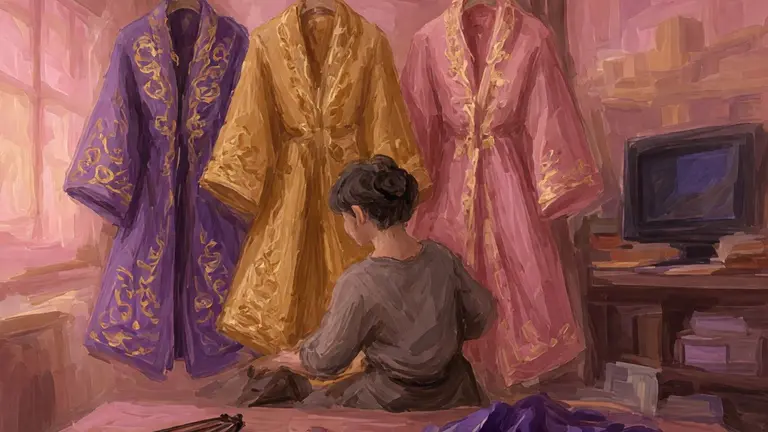
GMMTV, the Thai production company behind the drama Scarlet Heart Thailand, issued a statement on October 23, 2026 saying that the costumes of its upcoming series draw on Lanna, Tai ethnic, Chinese and Myanmar traditions, and not on Thai culture alone. The text answered a petition opened on October 20 by Myanmar viewers who say that several outfits in the teaser are royal court dress of the Konbaung dynasty. The series is scheduled to start on November 4, 2026.
A petition three days old and a statement the next day
The petition sits on Change.org and was started by DatarrX Foundation, which describes itself as an organisation building open datasets for Burmese and other regional languages. Its text is addressed to GMMTV, to the director Kanittha Kwanyu and to the production team, and it begins with a concession: because the series is a fictional fantasy adaptation, it says, "creative freedom is fully respected".
The objection is narrower than a rejection of the show. The petitioners write that several outfits worn by the characters are "historically and distinctively Myanmar traditional royal court attire" from the Konbaung dynasty, and that these garments have no historical relation to native Thai or Lanna royal traditions. Lanna is the cultural tradition of northern Thailand, one of the sources GMMTV names for the drama. They list four demands. GMMTV should review the designs and modify the outfits concerned. It should issue an official public apology. It should add an explicit on-screen credit to the Konbaung dynasty if any Myanmar element stays in the final cut. And it should stop presenting these garments as native Thai clothing in trailers and posters.
The petition closes on a sentence that sums up the request: "Let us appreciate culture through accurate recognition, not appropriation."
The Change.org page shows no signature count in its text. Wikipedia's entry on the series says more than 34,000 people have signed, a figure the petition page does not confirm.
The Thai outlet Thairath published an English-language summary on October 22, 2026. It reported that some Myanmar viewers see in the costumes, accessories and certain scenes a close resemblance to the royal attire of the late Konbaung period. It also summed up the petitioners' position as a call to balance creative freedom with "studying history and respecting the identities of related cultures".
Thairath added its own caution, in the same article. This, it wrote, "remains an allegation and request from some viewers", and "it is premature to conclude that the costumes are cultural appropriation without clear explanation".
What GMMTV wrote on October 23
GMMTV posted its statement on X, and we could not open that post. Khaosod English reported its content on October 23, 2026, and Wikipedia's entry for the series cites the same post.
According to Khaosod English, the company said the production team had researched costume, art and culture, then adapted what it found to give a distinctive identity to Ullavee, a fictional city created for the series. The city, it said, draws inspiration from the cultural diversity and beauty of Lanna, Tai ethnic, Chinese and Myanmar artistic traditions. Wikipedia's summary of the statement uses the same four names.
The company also said it admired Myanmar's artistic and cultural traditions for their beauty and distinctive character, and that it had no intention of presenting every element of the series as belonging to Thai culture. Then came the part the petitioners had asked for second, after the review. According to Khaosod English, GMMTV apologised for the concerns raised by the portrayal of cultural elements, thanked viewers for sharing their views and reference materials, and said it respected the deep connection people have with their cultural heritage, adding that it remained committed to honouring the cultures that inspired the series.
What the statement does not do, as Khaosod English reports it, is answer the petition point by point. Nothing in the report says that any outfit will be changed, or that an on-screen credit will appear. Those two demands remain open, and no report gives a date for an answer.
A story that has already crossed two borders
The drama is a remake of a remake. Its source is the Chinese novel Bu Bu Jing Xin by Tong Hua, published in 2005 and known in English as Startling by Each Step. Wikipedia counts Scarlet Heart Thailand as the third television adaptation, after the Chinese series Scarlet Heart of 2011, with Cecilia Liu and Nicky Wu, and the South Korean Moon Lovers: Scarlet Heart Ryeo of 2016, with Lee Ji-eun and Lee Joon-gi.
GMA News Online, a Philippine outlet, noted in April 2024 that the novel had been adapted for screen, radio and theatre several times, and that the Korean version reached Filipino viewers on GMA Network in 2017. The Thai version therefore arrives with an audience that knows the plot in two other settings.
In each country, the same device carries the story: a woman of today wakes up in another era, in someone else's body, among rival princes. Thairath describes the heroine as a modern woman disappointed in love who wishes to find true love before fate sends her back in time. In the Thai version she is Naboon, who wakes in the body of Fongnuan, a high-born young woman of Ullavee. Fongnuan is caught in a struggle among seven princes, in a story of love and fate.
The Chinese and Korean versions were set in real dynasties, the Qing and the Goryeo. The Thai team chose an invented city. That choice is what GMMTV's statement leans on, since an imaginary place can borrow from several real ones. It is also the reason the petition begins by granting creative freedom, then asks for credit for what was borrowed.
Who is on screen, and what the series cost to prepare
The lead is Tontawan Tantivejakul, known as Tu, born on November 7, 2000 in Bangkok. She is signed to GMMTV and became widely known with her first lead role, Gorya in F4 Thailand: Boys Over Flowers in 2021, the Thai version of the Japanese manga Hana Yori Dango. Wikipedia's entry gives her more than 5.9 million Instagram followers as of June 2026, and says she graduated in dentistry at Chulalongkorn University. In 2024 she made her film debut as Mui in How to Make Millions Before Grandma Dies, which the same entry calls a box office success in Thailand.
Opposite her are Metawin Opas-iamkajorn (Win), Korapat Kirdpan (Nanon), Tawan Vihokratana (Tay), Nattawat Jirochtikul (Fourth), Phuwin Tangsakyuen, Tanapon Sukumpantanasan (Perth) and Jiratchapong Srisang (Force), each as a prince. GMMTV announced the cast on April 23, 2024 at its Up & Above Part 2 event, with a trailer of about a minute.
The calendar that followed is long. Wikipedia reports that the cast trained in horse riding, archery, traditional dance and sword combat in September, that the first script read-through took place on May 19, 2025, and that principal photography began on August 26, 2025. The costumes now under discussion belong to a production that took more than two years to reach the screen,.
That length explains part of the stakes. By October 23, 2026 the outfits had been designed, made and shot, and a teaser had put them in front of viewers. The sources do not say whether GMMTV is weighing a change to the designs, a credit in the titles, or neither.
What the dispute shows about an audience
A Thai drama with a Thai cast is watched by viewers who are not Thai, and the petition is the proof. The petition speaks in the name of "viewers and cultural advocates", and it keeps the cast out of its complaint.
A statement was demanded fast. The petition opened on October 20, Thairath's summary came on October 22, and GMMTV's answer on October 23.
The apology came before the premiere, not after it, and the disagreement concerns attribution rather than the actors or the plot, as the petition's authors say. Whether the final episodes carry a credit to the Konbaung court, or a note on the sources of Ullavee's dress, is the concrete question that GMMTV has left open.
What comes next
The series is credited to three production companies, The One Enterprise, GMMTV and Nar-ra-tor, according to Wikipedia. Scarlet Heart Thailand is set to premiere on One 31 on November 4, 2026, airing on Wednesdays and Thursdays at 20:30 Bangkok time, according to Wikipedia. It will also stream at 21:45 on the OneD app. The opening titles of that first episode will be the first place where the petition's request for a credit can be checked.
Sources
- Stop Using Myanmar Court Dress as Thai Costumes in 'Scarlet Heart Thailand', Change.org, petition created October 20, 2026; same text on VoPeople
The audio version of this article is read by an AI-generated synthetic voice.
A generated AI Persona: not the person in this article, nor any real person.